
What This Blog Covers
If you’re an independent restaurant exploring online ordering, this guide walks through:
• What online ordering actually is — and what it isn’t
• What an online ordering system for restaurants should do for independent operators
• Why chargeback protection and order control matter more than flashy features
• How POS integration and third‑party delivery connections reduce daily chaos
• Why built‑in marketing tools matter once ordering is live
• The role of a real Customer Success Team — not just a help desk
• What operators are really looking for when they start searching for a better online ordering setup
TL;DR: Choosing the Best Online Ordering System for Restaurants
The best online ordering system for restaurants helps independent restaurants take control of orders, guest relationships, and revenue without adding operational chaos. In this guide, we break down what an online ordering system for restaurants actually does, how direct online ordering for restaurants compares to third-party marketplaces, and why commission-free online ordering, chargeback protection, and order control matter.
You’ll learn how having your own branded online ordering for restaurants, restaurant online ordering with website integration, and POS-integrated online ordering systems reduces missed calls and third-party fees and can give you the kind of control you need over your customer data and relationships. We explain why built-in marketing tools for restaurant online ordering, access to guest data, and support from a real Customer Success Team are essential for driving repeat business and long-term growth. We even talk chargebacks.
For operators searching for the best online ordering platform for independent restaurants, this is a comprehensive blog that outlines the restaurant online ordering features to look for, how to compare restaurant online ordering pricing, and how to choose a system that works in real-world restaurant conditions — from phone-heavy shifts to understaffed teams — while keeping ownership where it belongs, with you.
How to Choose the Best Online Ordering System for Your Restaurant
Online ordering isn’t one-size-fits-all. Want to know how to choose the right system for your restaurant? Keep reading.
If you run a neighborhood restaurant, you probably start your day with a million things on your to-do list. You’ve got onions to chop, you’ve been meaning to update your store hours on your Google business listing, and you just got hit with a hundred-dollar chargeback on food you served a month ago. Then, you get in the store, and you have three third-party tablets lighting up like slot machines, the phone ringing because someone wants to know when you’re open, a note that your driver called out, a bathroom that looks less than presentable, and a new team member who needs to be trained.
For most independent operators, that’s what their day looks like long before they ever search “best online ordering system for restaurants.” Because restaurant operators like you don’t start looking for new tech because they’re bored or curious. They look when they know what they’re currently doing isn’t working. Usually, they hit a breaking point.
A phone order goes sideways during the rush.
A guest clicks the marketplace link instead of your website and makes the big order you need for the night, and a huge chunk of the sale disappears into commission fees.
A third-party delivery app refunds a large order, and you have no control over it whatsoever.
Or you’re simply tired of losing orders because no one can get to the phone fast enough.
That’s when operators like you start exploring an online ordering system for restaurants — because they need to bring control to the chaos and profits back in-house or because they don’t have online ordering at all, and these days they know they need it.
But not just any online ordering system is the right one. You want branded online ordering for restaurants that looks and feels like your business — not a generic marketplace page where every menu blurs together.
You want something that makes life easier, not more complicated.
In this guide, we’ll walk through what makes the best online ordering system for restaurants, how direct online ordering for restaurants compares to third-party apps, what operational improvements you can realistically expect with the right system, and how you can choose between all of the online ordering systems available.
What Is an Online Ordering System for Restaurants?
An online ordering system for restaurants allows guests to place orders directly through a restaurant’s own digital channels, typically a website, for pickup, delivery, or curbside.
At its most basic, it replaces phone orders and handwritten tickets. At its best, a restaurant online ordering system becomes the digital front door of the business: how guests discover the menu, place orders, and decide whether they’ll come back.
Modern online ordering systems for restaurants act as more than just a digital front door. In addition to a branded ordering page and website, they also handle the checkout experience, payment flow, and confirmation process guests interact with when they place an order online. The most modern of the bunch can do much, much more. Unlike basic ordering widgets or third-party storefronts, a true online ordering system for restaurants connects ordering, payments, guest data, and follow-up communication into a single owned experience. Tools that only capture orders — without branding control, guest data, or marketing capabilities — often solve one problem while creating others.
A strong online ordering system for restaurants supports accurate menus and pricing on the ordering page, clear pickup or delivery timing, order confirmations, and automated email or SMS updates that keep guests informed without staff intervention.
More advanced systems also connect ordering to marketing. They capture customer information at checkout, enable follow-up communication, support promotions and loyalty programs, and give restaurants visibility into who is ordering and how often.
From an operator’s perspective, this distinction matters. Many restaurants searching for an online ordering system are trying to solve guest-facing problems — missed calls, order confusion, and order errors. Understanding what online ordering software does (and doesn’t) helps operators like you avoid buying the wrong tool for the wrong job.
Online ordering simplifies how guests order, so much so that they’ve grown to prefer it. It’s also changed how restaurants communicate and operate — creating a need for clarity, consistency, and control before the food ever reaches the line.
Why the Best Online Ordering System for Restaurants Matters
The best online ordering system for restaurants gives you control — over your guest data, your guest experience, your orders, and your revenue. your guest experience, your orders, and your revenue.
Most operators don’t realize how much control they’ve lost until something goes wrong. A guest places an order through a third party. That order gets refunded by the platform without your input. You’re left eating the cost, with no visibility into what happened, no say in the outcome, and no way to reach out to the guest to do damage control.
When a third-party customer has a bad experience, but you don’t have their contact information to follow up, apologize, or make it right, you likely lose the customer forever. The relationship ends where the problem started — outside your restaurant.
A strong online ordering system for restaurants keeps the customer relationship with the restaurant. Orders come in through your branded channels, not a marketplace. Guest information stays with you, which means if your ordering system is sophisticated enough, you easily reach out directly to the guest and ask for feedback and respond when something wasn’t to their satisfaction. That type of digital table touch is invaluable, and it can be built right into the same system that takes your orders.
That direct connection also makes everyday communication easier. Marketing and SMS reminders help restaurants set expectations, promote offers, and stay in touch with guests after the order without relying on third-party platforms.
Those capabilities turn online ordering into more than a transaction. They create a direct line between the restaurant and the guest. One that supports repeat business, protects revenue, and keeps ownership where it belongs.
Restaurant Online Ordering Platforms vs Third‑Party Marketplaces
Third‑party marketplaces aren’t inherently bad. For many independent restaurants, they can be a useful way to get discovered by new guests who might not have found you otherwise. They can help drive that first order, especially in competitive markets.
The tradeoff shows up when marketplaces become the only way guests order from you.
Relying exclusively on third‑party marketplaces often means higher fees, less control over refunds and chargebacks, and limited access to customer data. You may see orders come through, but you don’t fully own the relationship. When something goes wrong, decisions are often made without your input, and you pay the price.
That’s why many operators pair marketplaces with direct online ordering for restaurants. A simple rule of thumb: third-party marketplaces are effective for discovery, while direct online ordering systems are better suited for repeat business, margin protection, and long-term guest relationships.
Menufy gives restaurants a way to own the relationship after that first marketplace order. Menufy builds and hosts a branded, SEO‑optimized website where guests can order directly, without commissions eating into every sale. You keep control over guest data, communication, and marketing instead of handing it off to a third party.
Just as importantly, Menufy doesn’t force an all‑or‑nothing choice. It integrates with major third‑party delivery services, allowing restaurants to manage restaurant online ordering platforms like Menufy alongside marketplace orders without running separate systems or abandoning channels that still drive demand.
The result is flexibility without financial penalty. Third‑party marketplaces can help bring guests in the door. Menufy helps you keep them and save money doing it.
The Benefits of Direct Online Ordering for Restaurants
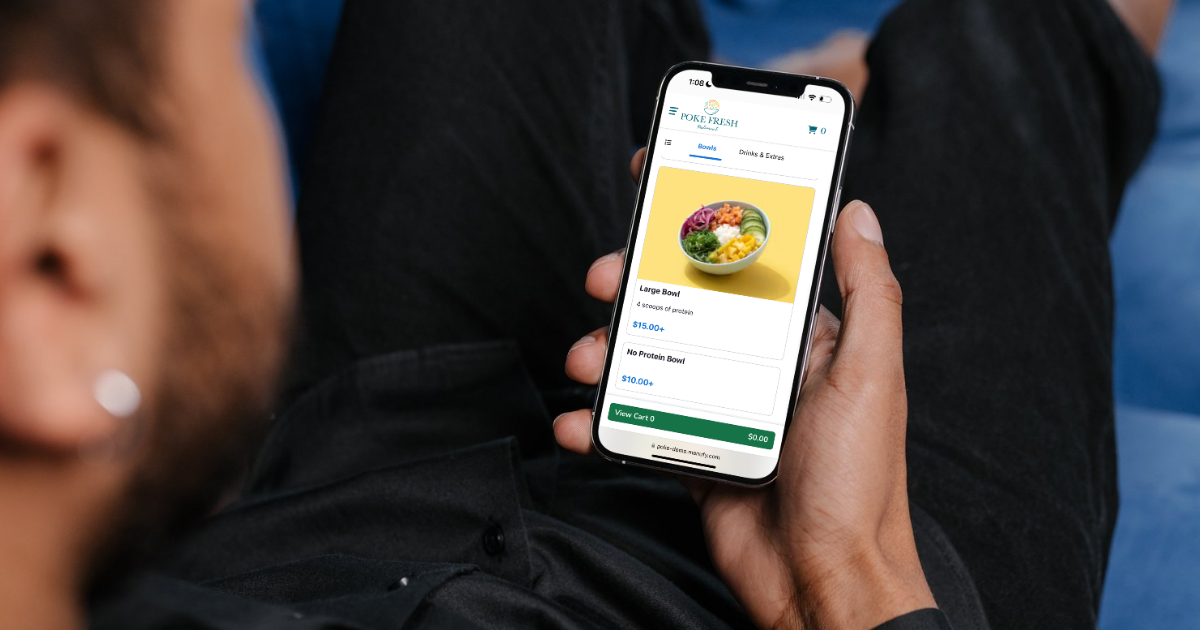
Direct online ordering for restaurants isn’t just about avoiding third-party fees. It’s about reclaiming ownership of the guest relationship, something that quietly disappears the moment orders start flowing through marketplaces.
When guests order directly from your website, the experience stays connected to your brand from start to finish. They see your menu, your pricing, your photos, and your messaging — not a generic marketplace interface designed to make every restaurant look interchangeable. Over time, that consistency builds familiarity and trust, which is what brings guests back.
A restaurant direct ordering system also changes what happens after the order is placed. Instead of the interaction ending at checkout, direct ordering allows restaurants to stay in touch with guests through order confirmations, updates, and follow-up communication. That connection becomes especially important when something doesn’t go perfectly. Rather than being locked out of the conversation, restaurants can respond directly, resolve issues, and protect the guest relationship.
With restaurant owned online ordering, customer data stays with you. You can see who is ordering, how often they order, and what channels actually drive repeat business. That insight makes marketing more effective. Instead of blasting promotions to strangers, restaurants can send relevant emails or texts to guests who already know and like their food.
Direct ordering also supports better decision-making over time. When orders aren’t fragmented across multiple platforms, restaurants gain a clearer picture of what’s working, what isn’t, and where revenue is really coming from.
For independent restaurants, the benefits of direct online ordering compound. Stronger branding, better guest communication, more effective marketing, and greater control all work together to create a system that supports growth without sacrificing ownership.
Commission‑Free Online Ordering and Fee Transparency
For many independent operators, this is where online ordering stops being theoretical and starts hitting the bottom line.
Orders are coming in. Volume looks healthy. But when you actually sit down to reconcile payouts, the numbers feel off. Marketplace commissions, service fees, delivery fees, and refunds issued without your approval and chargebacks quietly chip away at revenue. What looked like a solid sales day suddenly isn’t, and there’s often very little context or control when that happens.
This is why commission‑free online ordering matters so much to independent restaurants. Over time, even a 15–30% commission on repeat orders can significantly impact margins for independent restaurants operating on tight profit windows. A direct online ordering system for restaurants removes marketplace commissions and replaces guesswork with transparency. You know what each order costs to process, what revenue you keep, and where your money actually goes.
Fee transparency also gives restaurants control when issues arise. Instead of being locked out of the conversation, operators can see the order, understand what happened, and decide how to handle it, whether that means issuing a refund, offering a credit, or reaching out personally to make things right. That control protects both margins and guest relationships.
Just as importantly, predictable costs make smarter marketing possible. When you’re not handing over a large percentage of every order to a third party, you can price menus confidently, run promotions intentionally, and invest in email and SMS campaigns knowing the return won’t be quietly siphoned off by commissions.
For independent restaurants, online ordering without third‑party fees isn’t about cutting corners. It’s about clarity, fewer surprises, and staying in control of your revenue.
Branded Online Ordering for Restaurants
With branded online ordering for restaurants, guests aren’t just placing an order — they’re stepping into your space.
Think about it this way. Imagine if third-party marketplaces had been around when McDonald’s was first taking off. Someone craving a burger wouldn’t have landed on golden arches or bold red-and-yellow branding. They would’ve landed on a generic ordering page that looked exactly like every other burger joint in town. No arches. No familiar colors. No sense of who McDonald’s even was.
You might not be trying to build the next global franchise, but the same idea applies at a neighborhood level. Your regulars recognize your logo. They know your vibe. They come back because your food — and your brand — feels familiar. When orders are routed through a third-party marketplace, that identity gets flattened. Every restaurant starts to look the same.
Online ordering with custom branding keeps your restaurant recognizable at the moment it matters most — when guests are deciding where to order. Your menu, your photos, your colors, your voice. The experience feels like an extension of your restaurant, not a detour through someone else’s platform.
Branded ordering also reinforces trust. Guests know exactly who they’re ordering from which is important as ghost kitchens gain in popularity. With branded ordering, there’s no confusion about where the food is coming from, who to contact if something’s off, or whether they’re on the “right” site. That clarity reduces hesitation and makes repeat ordering easier.
Over time, that consistency adds up. Every direct order strengthens brand recognition in your neighborhood. Every interaction reinforces that guests are ordering from you, not through you. And that’s how independent restaurants build momentum — one familiar, branded experience at a time.
Restaurant Online Ordering with Website Integration
“Website integration” is one of those phrases that sounds technical, but for independent restaurants, it really comes down to one simple question: Where do guests actually land when they’re ready to order?
For a lot of operators, the answer is still unclear. A guest Googles the restaurant, clicks a third-party link by accident, and places an order somewhere the restaurant doesn’t control. The food goes out, but so does the relationship and the data.
Strong restaurant online ordering with website integration means your ordering experience lives where your brand already does: on your own website. From an SEO standpoint, this ensures high-intent search traffic flows to the restaurant’s own domain, rather than diverting potential repeat customers to third-party marketplace pages. Guests discover your restaurant through search, land on a branded site, view your menu, and place an order without being redirected to a marketplace or competitor-filled page.
This is where Menufy comes in.
Menufy sets independent restaurants up with a fully branded, SEO-friendly website designed specifically for online ordering. The Menufy team handles the heavy lifting which includes site setup, hosting, ongoing updates, and menu changes so you don’t have to manage another system on their own. To see how this setup works from website to checkout, you can see how Menufy works here.
Menufy also helps restaurants get found in the first place. Every Menufy site is built with SEO in mind, helping independent restaurants show up higher in Google search results when guests are deciding where to order.
In addition, Menufy manages each restaurant’s Google Business listing to ensure menus, hours, and key details stay accurate and up to date — so what guests see in search matches what they experience when they click through.
The result is a clearer path from discovery to order: guests find your restaurant on Google, land on your website, and order directly through your branded experience — not a marketplace page.
When online ordering is integrated into a restaurant’s website this way, everything feels intentional. Guests know they’re ordering directly from the restaurant. Operators know where orders are coming from. And the entire experience — from search to checkout — stays connected.
That’s what real website integration looks like. Not a technical add-on, but a fully managed foundation that makes direct ordering easier for guests and simpler for operators.
Marketing Tools Inside Restaurant Online Ordering Systems
Modern online ordering systems should do more than process payments. For independent restaurants, the real value starts after the first order.
That’s where built-in marketing tools matter.
With the right restaurant online ordering system, restaurants can market directly to guests who have already ordered from them. Email marketing makes it possible to stay in touch with customers beyond the transaction, whether that’s sharing a limited-time special, reminding guests about a favorite item, or sending a nudge on a slower day when you want to drive orders.
Menufy also helps restaurants bridge the gap between third-party and direct ordering. Printed coupon cards included in takeout and delivery bags give guests a clear incentive to order directly next time — especially when a guest’s first interaction came through a marketplace, the restaurant doesn’t control.
For independent restaurants, repeat ordering isn’t driven by gimmicks. It’s driven by familiarity. When guests recognize your brand, receive consistent communication, and know exactly where to order next time, habits form.
That’s the difference between an online ordering system that simply takes orders and one that helps independent restaurants grow — by turning one-time into lifetime fans.
Everyday Use Cases for Online Ordering for Restaurants
Online ordering shows up in different ways throughout a restaurant’s day, not just during the dinner rush.
At the most basic level, online ordering for takeout and delivery gives guests a clear, reliable way to place orders without calling the store. That matters because phone orders compete with everything else happening at the same time: guests at the counter, food coming off the line, staff covering multiple roles. When ordering happens online, the guest handles menu browsing, customization, and payment on their own — without tying up a phone line or pulling someone away from service.
Pickup and curbside ordering solve a different problem. Online ordering for pickup and curbside lets guests place and pay for orders ahead of time, then arrive knowing exactly what to expect. For restaurants, that predictability matters. Orders arrive with clear details, timestamps, and confirmations, making it easier to plan handoff without last‑minute confusion or back‑and‑forth.
Delivery is similar. Whether orders are fulfilled in‑house or through third‑party drivers, online ordering provides a single, consistent way for guests to place orders and receive updates. Restaurants aren’t fielding “where’s my food,” calls or answering the same questions repeatedly because guests already have the information they need.
Taken together, these everyday use cases aren’t about speed for speed’s sake. They’re about reducing interruptions, minimizing miscommunication, and giving guests a self‑serve ordering option that works alongside the realities of a busy restaurant.
That’s where online ordering earns its place day to day — not as a silver bullet, but as a steady, dependable way to handle orders across takeout, pickup, curbside, and delivery.
Scaling with Online Ordering for High‑Volume and Multi‑Location Restaurants
For growing brands, online ordering for high-volume restaurants and online ordering for multi-location restaurants must support consistency.
When you’re handling more orders (or running more than one store), the small gaps start to show: menus that drift, pricing that gets updated in one place but not another, promos that don’t roll out cleanly, and order data that’s scattered across systems. You need a setup that won’t crack when volume spikes.
That’s where Menufy Premium fits: it combines online ordering with POS integration via HungerRush, so orders flow into one connected system as you grow. If scaling is on the horizon, this is the package built for it. (Learn more: Menufy Premium (POS) and Menufy Online Ordering + HungerRush POS).
Comparing the Best Online Ordering Platform for Restaurants
A meaningful restaurant online ordering comparison goes beyond feature lists.
Yes, you should look at things like menu control, branding, and integrations — but the bigger questions are: Do you own the guest relationship? Are costs predictable? Can you market to guests after they order? And when something goes wrong, do you have real support?
If you’re reading restaurant online ordering reviews, treat them like a gut check — then compare the fundamentals: restaurant online ordering pricing, setup effort, marketing depth, and what you actually control. The best online ordering platform for restaurants is the one that protects your margins and your guest relationships.
Menufy is designed for that long game: direct ordering, built‑in marketing, and hands‑on support that doesn’t disappear after launch. (Start here: Menufy Plans & Pricing and Menufy Marketing Advantage).
Competitive Alternatives to Marketplaces
Operators like you often explore ChowNow alternatives, compare Toast online ordering vs direct platforms, or evaluate Square online ordering for restaurants and DoorDash Storefront alternatives.
Here’s the simplest way to think about it: marketplace storefronts can generate orders — but they rarely help you build repeat orders under your brand. If a platform doesn’t give you meaningful guest data, predictable costs, and the ability to market directly, you’re often renting demand instead of building it.
Menufy is built around direct ordering ownership and flexibility. You can keep third‑party delivery connections where they make sense — while shifting repeat business to your own branded channels over time. If POS connectivity is part of your comparison, Menufy also offers integrations such as Square (e.g., Square online food ordering integration).
How to Choose an Online Ordering System for Restaurants
Knowing how to choose an online ordering system for restaurants starts with understanding your operation.
Key restaurant online ordering features to look for include:
A branded ordering experience that lives on your website
Predictable, transparent costs (so you’re not surprised at payout time)
Access to guest data (so you can market after the first order)
Marketing tools that drive repeat business (email, text, promos, loyalty)
Third‑party delivery connections (when you need them)
Real support — a Customer Success Team, not a chatbot
If you’re an independent operator, the best system is the one that gives you control without adding chaos.
Menufy checks those boxes with two paths: Marketing Advantage for direct ordering + built‑in marketing. And a POS when you’re ready for point-of-sale integration and scaling.
The Best Way to Set Up Online Ordering for a Restaurant
The best way to set up online ordering for a restaurant is to start with owned channels, optimize menus for digital ordering, and guide guests clearly toward direct ordering.
Practically, that means: your Google presence points to your website (not a marketplace), your website makes ordering obvious, your menu is clean and accurate, and guests get confirmation and updates automatically. After that, you layer in repeat‑order tools — loyalty, promos, and smart follow‑ups.
Menufy is built to do the heavy lifting here: a branded, SEO‑optimized website with online ordering, plus marketing tools that help you turn first‑time orders into repeat habits. (Explore: How Menufy Works).
Pros and Cons of Restaurant Online Ordering Systems
Understanding the pros and cons of restaurant online ordering systems helps operators answer an important question: is direct online ordering better than third-party apps?
For many independent restaurants, the pros of direct ordering are clear: you keep more revenue, you own the guest relationship, and you can market to guests after the order. The “con” is usually effort — building the website, setting up marketing, keeping things updated.
That’s why the best direct platforms don’t just give you software — they give you support.
Menufy gives restaurants the benefits of direct ordering without forcing an all‑or‑nothing decision with third parties — and without making you manage everything alone. With Menufy you’ll have a dedicated customer success manager ready to roll up their sleeves and help with all of your goals.
Ready to see how Menufy can help your restaurant rank, earn, and grow?
FAQ: Online Ordering Systems for Restaurants
-
The best system prioritizes direct ordering, branding, reliability, guest data ownership, and real support.
-
Direct ordering gives restaurants more control, more predictable costs, and a stronger guest relationship.
-
Not necessarily. Many restaurants use both — marketplaces for discovery, direct ordering for repeat business.
-
It depends on the platform. Look for transparent pricing and predictable costs. Start here: Menufy Plans & Pricing.
-
Yes. The right system helps you get found, own your guest relationships, and drive repeat orders.