

The 4th of July is one of the top five food-ordering days of the year. Families are home. Grills are going. And a whole lot of people who have never ordered from your restaurant are about to discover you.
What you do with that surge matters more than you might think. Not just for this weekend, but for the next twelve months.
Because reviews are how Google decides who shows up when someone searches "best wings near me" or "restaurants open 4th of July." And the restaurants that show up first are the ones that built their review profile before the holiday rush hit.
Here's how to turn Independence Day traffic into a reviews engine that runs all year.
Why 4th of July is a reviews goldmine
Holiday weekends bring in guests you'd never reach on a random Tuesday. New neighborhoods. New zip codes. People visiting family, ordering for a crowd, trying something they wouldn't normally try.
Each one of those orders is a potential 5-star review from someone who had never heard of you before Friday.
Reviews matter beyond what you can see on your listing. The visible effect is conversion: 70%+ of people read reviews before placing a food order. The less visible effect is ranking. Google's local search algorithm weighs review quantity, recency, and your engagement with those reviews as active signals. Recency matters as much as volume. (For a full breakdown of how reviews fit into your local search presence, see our guide to local SEO for restaurants.)
There's also an AI layer now. As more people use ChatGPT, Google Gemini, and Perplexity to find restaurants, review volume has become the dominant ranking signal. A 2026 study by MyPlace found that AI-recommended restaurants average 3,424 Google reviews, compared to just 955 for comparable restaurants that didn't make the cut. That's a 3.6x gap. Star ratings above 4.4 had almost no impact on recommendation likelihood. What mattered was review volume.
The restaurants winning on AI search are the ones that built their review profile early. The 4th of July is a great time to start, or accelerate.
Responding to reviews: why you can't skip this step
BrightLocal's 2026 Local Consumer Review Survey found that 93% of consumers read business responses to reviews, and businesses that respond to 75% or more of their reviews are seen as 2.8x more trustworthy. Responding to positive reviews builds goodwill and signals to Google that your profile is actively managed.
Responding to negative reviews is more important, and more delicate. A professional, empathetic response to a 1-star review often does more for your reputation than 10 additional 5-star reviews. The worst response to a bad review is no response, or a defensive one.
A restaurant doing 200 orders per week might receive 15–25 reviews weekly. That's not manageable if you're doing it manually during a holiday weekend. AI-powered review reply tools draft brand-appropriate responses automatically, requiring only a quick scan before you post. This is exactly where automation earns its keep.
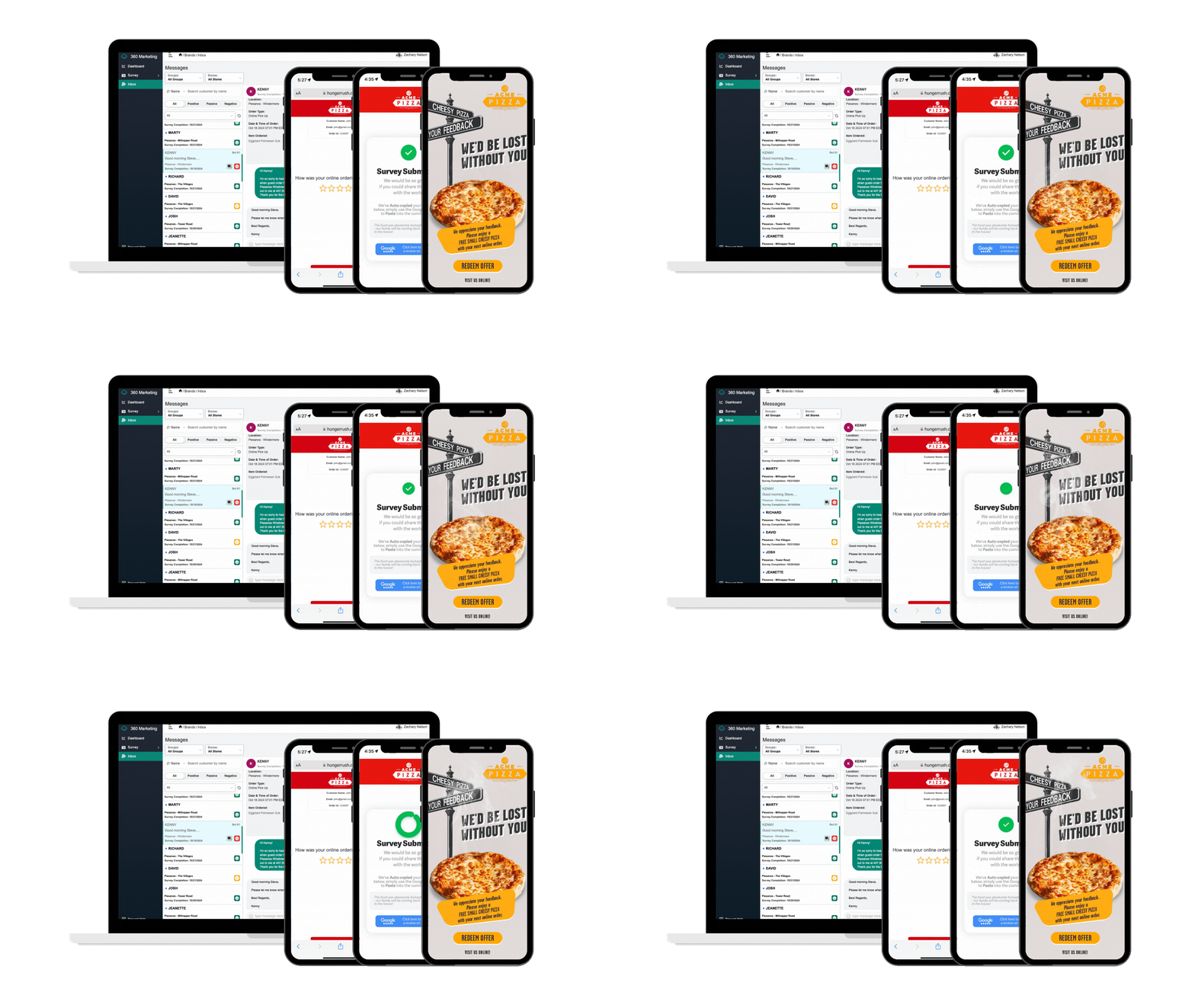
What Menufy handles: Menufy's Feedback tool sends an automated survey 90 minutes after every direct order. Negative feedback gets routed directly to your inbox so you can address it before it becomes a public review. Happy guests are prompted to share their experience on Google. And Feedback's AI-powered response drafting writes replies in your restaurant's voice, so your profile stays engaged without adding to your workload. One Menufy restaurant went from a 4.22 to a 4.80 Google rating in under three months using this flow.
Handling a negative review without losing your mind
Three steps: acknowledge the specific experience, apologize without being defensive, offer a resolution. That's it.
Don't argue. Don't explain why they're wrong. Don't respond when you're frustrated.
One more thing worth saying: the goal isn't a perfect 5.0 rating. A 4.6 or 4.7 with hundreds of reviews and active responses is far more credible, and more valuable for rankings, than a 5.0 with 12 reviews and no engagement. Guests know the difference.
Make the 4th of July count all year
The holiday weekend will bring you new guests. Some of them will love what you made. A few will tell their friends. But the ones who leave a Google review? They do your marketing for months.
The restaurants that show up first on Google and in AI search aren't necessarily the best in the city. They're the ones that made it easy for happy guests to say so, and kept doing it consistently.
Menufy Marketing Advantage includes automated AI review reply technology that drafts professional, on-brand responses to your Google reviews, keeping your profile active and your ranking signals strong.

Does responding to Google reviews actually help my ranking?
Yes. Google considers owner responses as a signal that your profile is actively managed. It's not a huge ranking factor on its own, but combined with review volume and recency, it adds up.
How many reviews do I need to rank well?
There's no magic number, but the gap between AI-recommended restaurants and those that don't make the cut is significant. A 2026 study found AI-recommended restaurants average 3,424 reviews versus 955 for comparable restaurants. Volume and recency both matter.
What's the fastest way to get more Google reviews?
Post-order texts with a direct review link. They're automated, they reach guests at peak satisfaction, and they require no extra effort on your part after setup.
Should I respond to every review, even the 5-star ones?
Yes. Even a short "Thanks so much, glad you enjoyed it!" signals to Google that your profile is active and shows potential guests that you care.