
Restaurant email and SMS marketing: drive more repeat orders
Most restaurant owners market to strangers. They post on Instagram hoping the algorithm finds the right people. They run Google Ads to guests who have never heard of them. And the whole time, there are easier wins sitting right in front of them.
None of that is as efficient as marketing to people who already love your food and have already given you their contact information.
That's what email and SMS marketing does. When you combine them properly, they become the most reliable repeat-order channel a restaurant can build.
Why email and SMS work better together
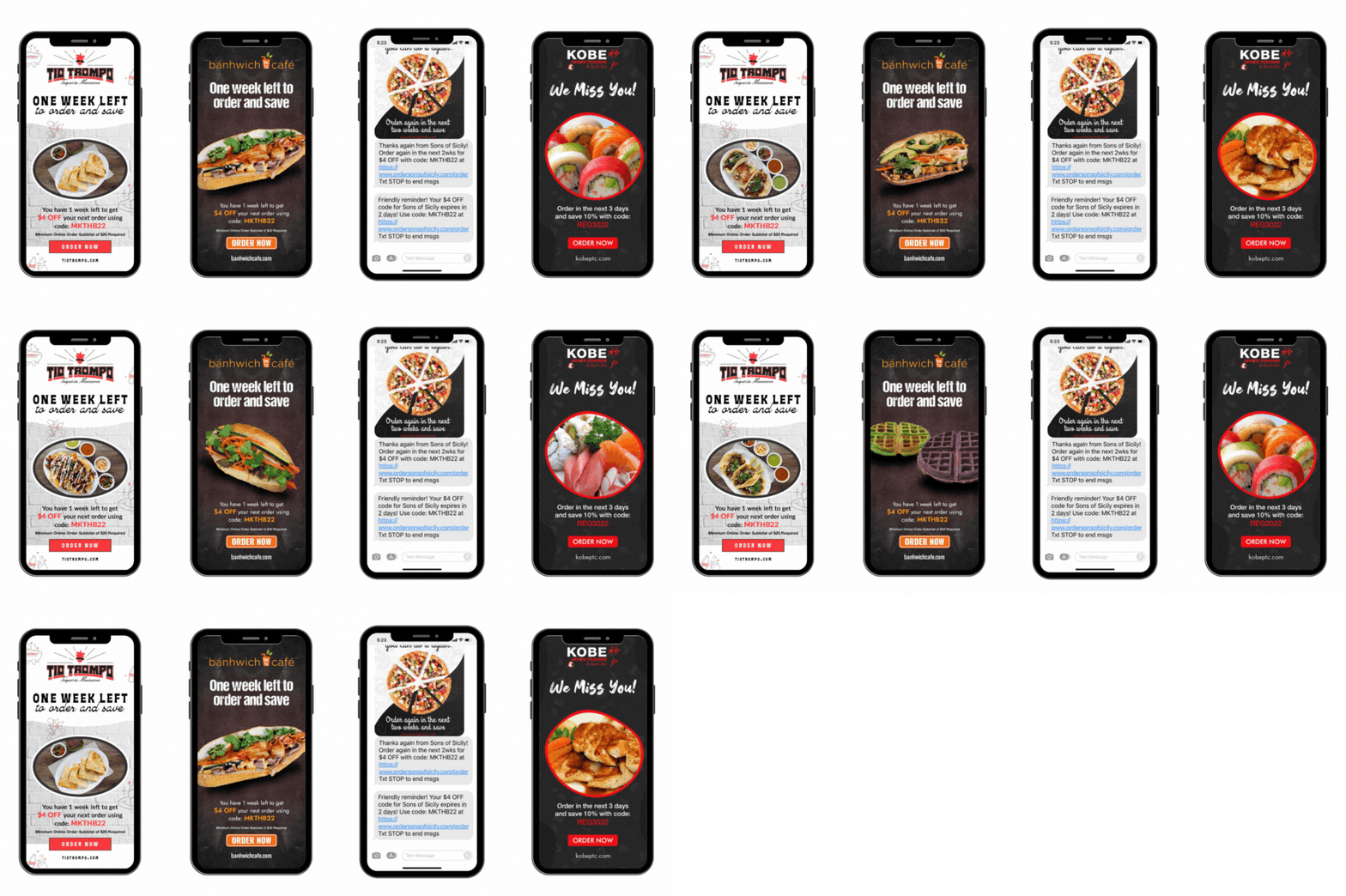
Email is high-information, lower urgency. It's ideal for weekly specials, new menu items, seasonal promotions, loyalty program updates, and storytelling about your restaurant. Restaurant emails consistently outperform cross-industry averages, meaning a significant portion of your list will read every message you send.
SMS is high urgency, low information. It's ideal for flash deals, lunchtime promotions, and loyalty reward reminders. SMS open rates far exceed email, making it the highest-attention marketing channel available to restaurants.
The automation is what makes it work: set the sequences once and let them run while you're running the kitchen.
Building your guest list: the foundation
None of this works without a list. The most efficient way to build one is through your direct online ordering system. Every guest who places an order has their email and phone number collected at checkout as part of the order confirmation flow.
This is one of the core reasons owning your online ordering channel is so much more valuable than relying exclusively on third-party apps. When someone orders through DoorDash, their contact information belongs to DoorDash. When they order through your website, it belongs to you. If you want to go deeper on what those platform relationships actually cost, this breakdown of restaurant delivery app fees is a good place to start.
A small first-order incentive tied to email and SMS opt-in can accelerate list growth significantly. Over time, a restaurant doing consistent direct order volume can build a meaningful subscriber base with no additional marketing spend.
Menufy captures every direct order guest automatically, so your list grows every time someone orders from your site.
How to run this without a marketing team
When evaluating marketing platforms, look for: automatic list capture from your ordering system, pre-built email and SMS templates for restaurants, automated trigger sequences, and reporting that shows actual revenue attribution, not just open rates. This guide on what to look for in an online ordering system covers how to evaluate the full picture.
Menufy's marketing tools capture every direct order guest, run post-order sequences automatically, and show you which campaigns drove real orders. Set it up once. It runs in the background.
Does email marketing actually work for restaurants?
Yes, and it works especially well because restaurant email lists are earned, not rented. Guests opt in at the point of ordering, so they already have a relationship with your restaurant. That context makes restaurant email open rates consistently higher than most other industries.
What's the difference between email and SMS marketing for restaurants?
Email is better for longer content: weekly specials, new menu announcements, loyalty updates. SMS is better for urgency: a lunchtime deal, a reward reminder, a flash promotion. The two channels complement each other because they reach guests in different mindsets.
How do I build a restaurant email list without a separate tool?
The simplest approach is to capture emails at the point of direct ordering. Every guest who orders from your website provides an email address as part of checkout. A direct ordering platform that connects those emails to your marketing system eliminates the need to maintain a separate list-building tool.
Do I need a marketing team to run email and SMS automation?
No. Effective restaurant email and SMS marketing runs on automated triggers, not manual campaigns. Post-order follow-ups, habit boosters, and win-back messages are all set-it-and-forget-it sequences. Most restaurant owners spend less than an hour a month maintaining them once the initial setup is done.
Why is direct ordering important for email and SMS marketing?
When a guest orders through a third-party app, their contact information belongs to that platform, not to you. When they order directly from your website, you own that data. Building a marketing list from direct orders means every future campaign reaches guests at zero additional cost, and you're not paying a platform for access to your own guests.
ABOUT THE AUTHOR

Courtney Kitchens, SR. MARKETING SPECIALIST
Courtney, an English teacher turned marketer at Menufy, draws inspiration from the restaurant industry's everyday moments. Her writing is a testament to her expertise, providing insightful and compelling accounts of the industry's diverse and vibrant nature.